Structural carpenter ant eradication in Cincinnati, OH addresses primary and satellite nests established inside historic architectural frameworks. Properties in Over-the-Rhine, Walnut Hills, and Mount Adams feature…
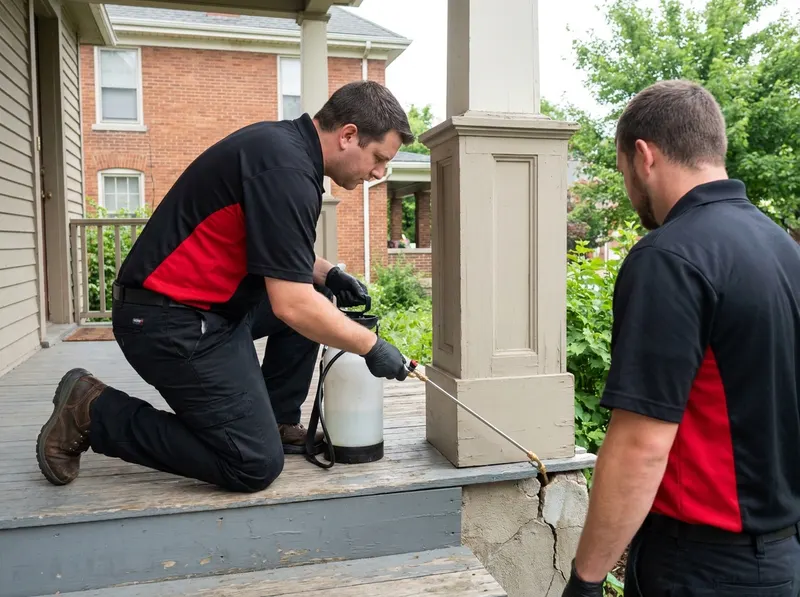
Structural carpenter ant eradication in Cincinnati, OH addresses primary and satellite nests established inside historic architectural frameworks. Properties in Over-the-Rhine, Walnut Hills, and Mount Adams feature century-old soft-timber framing, limestone foundations, and box gutters that trap regional humidity from the Ohio River valley. In contrast to subterranean termites which ingest cellulose, carpenter ants excavate clean nesting galleries along structural floor joists, rim joists, and porch supports, leaving coarse, wood-colored frass shavings beneath baseboards. The biological cycle of Camponotus pennsylvanicus involves parent colonies located in decaying tree hollows or buried stumps, which subsequently establish satellite nests inside interior studs compromised by elevated moisture readings. According to technical management standards published by the MSU Extension Service, successful colony disruption requires direct void injection of non-repellent micro-dusts rather than indiscriminate broadcast liquid sprays that simply scatter satellite workers into secondary wall cavities.
Eradication follows a standardized five-step technical sequence designed to isolate the nesting galleries without excessive chemical volume:
Choosing void-directed extraction over broad chemical flooding represents a calculated operational trade-off. Broadcast pyrethroid applications create quick exterior knockdown along patio surfaces, but repellent chemistries fail to penetrate the heartwood where reproductive females dwell, frequently causing satellite colonies to fracture deeper into dry ceiling beams. Directed void treatment targets specific joist cavities, resolving infestations at the root while reducing chemical exposure for families, pets, and indoor environments. Properties near dense urban canopies such as Eden Park, Spring Grove Cemetery and Arboretum, and Ault Park experience constant seasonal immigration of carpenter ant queens during spring nuptial flights. Effective structural protection requires sealing plumbing utility penetrations, correcting gutter overflow, and applying non-repellent chemistries compliant with the Ohio Department of Agriculture commercial pesticide regulations.
Technicians at Ashmere Insect Solutions execute targeted botanical and transfer treatments using equipment calibrated to OSHA 1910 safety specifications and protocols from the National Pest Management Association. Structural remediation is coordinated alongside recommendations from the USDA Forest Service regarding exterior wood-to-ground contact management. For structural assessments, contact (513) 812-8078.
Every job gets a firm, written price after an on-site visit.
Tell us about your structural carpenter ant eradication job in Cincinnati and we'll send a clear, written quote, usually the same day.
 Ashmere Insect Solutions