Ashmere Insect Solutions delivers flea and tick yard suppression across Cincinnati to eliminate blood-feeding parasites before they migrate indoors onto domestic pets or human hosts. In suburban and urban neighborhoods…
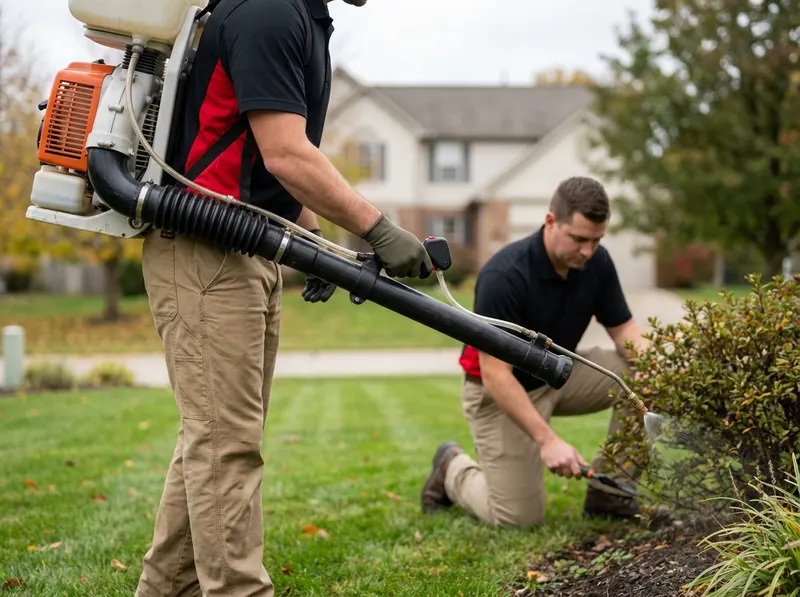
Ashmere Insect Solutions delivers flea and tick yard suppression across Cincinnati to eliminate blood-feeding parasites before they migrate indoors onto domestic pets or human hosts. In suburban and urban neighborhoods like Hyde Park, Mount Lookout, and Oakley, residential properties feature dense decorative borders, heavy ground ivy, and mature canopy trees that generate prime microclimates for vector development. Ticks seek sheltered brush, utilizing questing behavior described by the Centers for Disease Control and Prevention to latch onto passing hosts, while flea pupae thrive in damp, organic soil layers beneath porch footings. Unmanaged vegetation adjacent to regional parklands, including spaces buffering Eden Park and Ault Park, routinely harbors wildlife reservoirs such as white-tailed deer, raccoons, and feral felines that shed parasite eggs directly into manicured lawns.
Effective suppression requires deliberate, low-impact residual compounds applied directly to targeted transition areas rather than indiscriminate broad-spectrum blanket spraying across open sunlight zones where ticks naturally desiccate. Outdoor applications target the immediate 10-foot boundary where manicured grass transitions into wooded margins, thick leaf litter, or stone retaining walls common to Clifton, Walnut Hills, and Mount Adams hillsides. Guidance outlined by the U.S. Environmental Protection Agency emphasizes focused structural and landscape applications to interrupt insect reproduction without disturbing pollinator routes. This targeted perimeter method safeguards structural perimeters, prevents juvenile nymph emergence, and establishes a durable exterior defense without off-target drift.
Implementing professional landscape treatments eliminates common points of failure associated with hardware-store broadcast granules and botanical yard sprays, which routinely break down under seasonal precipitation or fail to permeate dense foliage. Regulatory standards managed by the Ohio Department of Agriculture govern commercial pesticide management to ensure safe and compliant ground applications across urban communities like Northside, Pleasant Ridge, and College Hill. The trade-off between standard homeowner-applied foggers and targeted barrier suppression centers on canopy penetration: commercial low-pressure mist blowers deliver micro-droplets directly under the horizontal leaf layer where gravid female fleas oviposit, breaking the re-infestation cycle at its biological origin.
Veterinary protocols documented by the American Veterinary Medical Association confirm that comprehensive vector suppression requires synchronized exterior property intervention alongside on-animal preventatives to stop perpetual re-infestation. Technical equipment and safety standards outlined by the Occupational Safety and Health Administration govern how technicians deploy equipment along Cincinnati's complex vertical topography. By strictly aligning our interventions with guidelines from the Entomological Society of America and landscape management frameworks from the National Pest Management Association, properties obtain systematic parasite population declines. Ongoing regional tick surveillance supported by the Ohio Department of Health reinforces the necessity of localized barrier management from early spring through autumn frost across Southwest Ohio. Diagnostic resources from Ohio State University Extension highlight that urban microclimates retain sufficient subsurface humidity to prolong parasite activity well into October, making sustained suppressive barriers an operational necessity. To schedule an on-site property evaluation, call (513) 812-8078.
Every job gets a firm, written price after an on-site visit.
Tell us about your flea and tick yard suppression job in Cincinnati and we'll send a clear, written quote, usually the same day.
 Ashmere Insect Solutions