Older architecture throughout Hamilton County presents unique entry points for invasive fauna. Historic brick structures in Over-the-Rhine and Walnut Hills often feature deteriorated mortar, uncapped brick chimneys,…
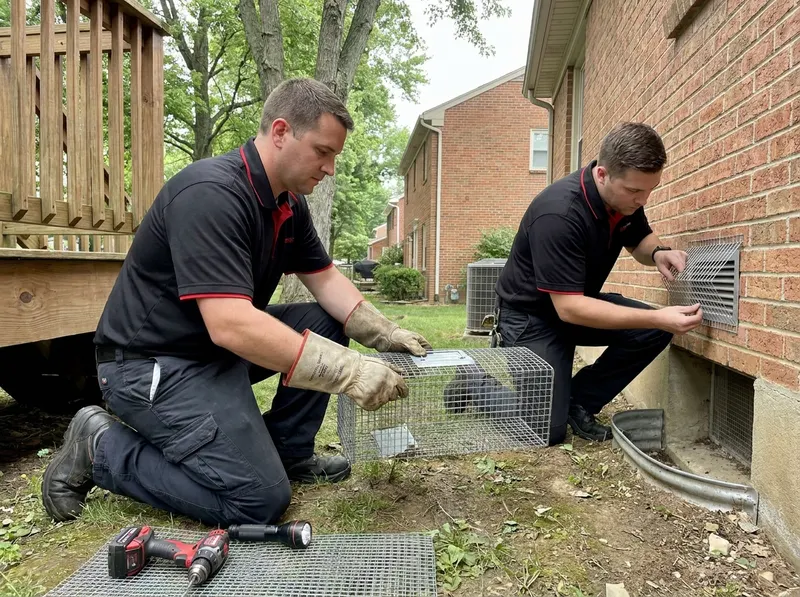
Older architecture throughout Hamilton County presents unique entry points for invasive fauna. gov">Ohio Department of Natural Resources) and squirrels direct access into dry ceiling spaces. Similarly, the dense oak canopy covering residential streets in Hyde Park, Mount Lookout, and Clifton creates direct overhead bridges onto slate and dimensional shingle roofs.
Targeted eradication requires physical mechanical control rather than broadcast poison baits, which violate humane standards and create unreachable decomposing carcasses inside finished walls. Technicians inspect roof ridges, gable louvers, foundation crawl vents, and cantilevered overhangs across Mount Adams and College Hill properties. gov">Ohio Department of Agriculture guidelines.
Structural defense replaces damaged timber and rotted louvers with heavy-duty materials impervious to teeth and claws. Technicians install 16-gauge, hot-dipped galvanized 1/4-inch steel hardware cloth across gable vents, roof sub-fascia corners, and crawlspace entries. Heavy stainless-steel chimney caps prevent secondary nesting by chimney swifts and squirrels.
Long-term defense balances exclusion durability with historic home aesthetics. While light plastic screening is inexpensive, gnawing rodents breach it within 48 hours; rigid 16-gauge steel mesh requires greater installation labor but stops repeat penetration permanently. gov">Occupational Safety and Health Administration to protect inhabited building interiors from airborne spore circulation during attic waste extraction.
For prompt assessment of home wildlife activity, call (513) 812-8078.
Every job gets a firm, written price after an on-site visit.
Tell us about your nuisance wildlife trapping and habitat deterrence job in Cincinnati and we'll send a clear, written quote, usually the same day.
 Ashmere Insect Solutions